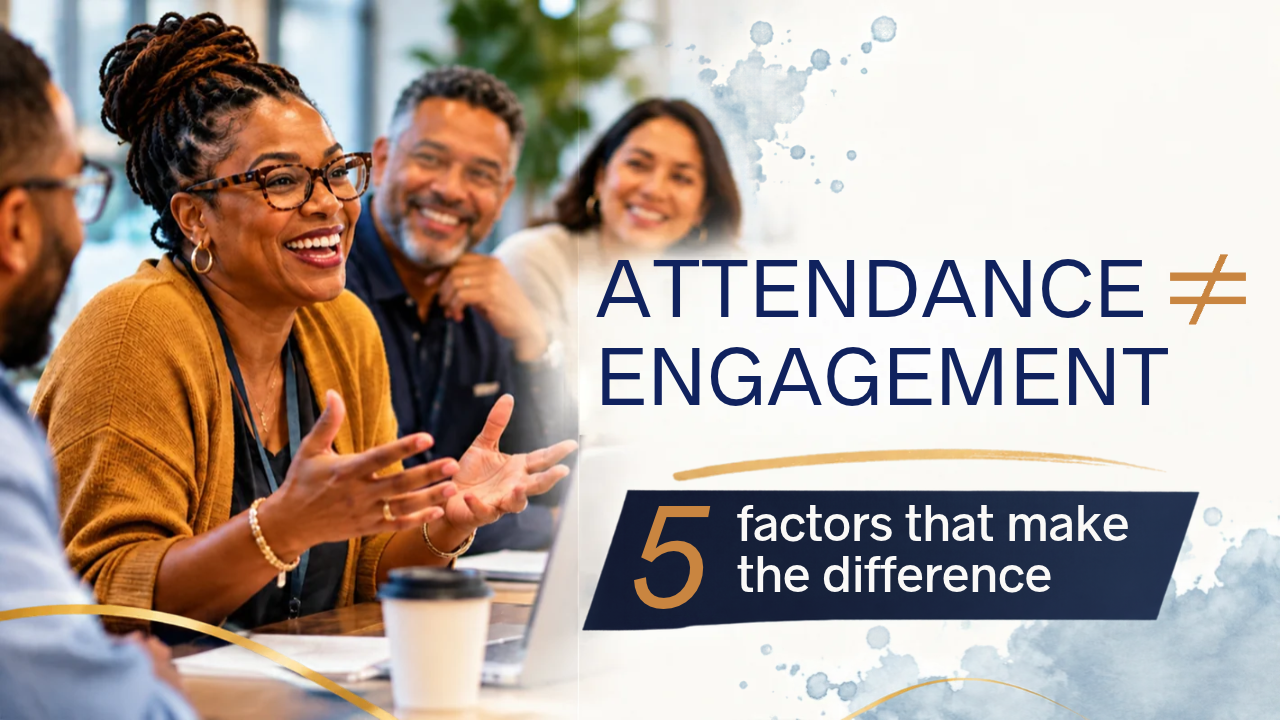
Getting People Together Is Only the Beginning
Unpopular opinion: I hate 1,000+ person conferences.
Why? Because there's often so much emphasis on getting people in the room that less attention is given to what happens once they get there. Sure, 1,000 people may be physically present, but how many are actually engaged? How many are participating, making meaningful connections, or learning from one another?
I can't be the only one who's experienced this. Have you ever attended a meeting, workshop, or conference where you were physically present but not particularly engaged? Maybe you spent most of the time listening, weren't sure when or how to contribute, or left without making any meaningful connections.
It's a reminder that bringing people together doesn't automatically create meaningful engagement.
When designing learning experiences, particularly synchronous experiences where people are participating together in real time, we have to think beyond attendance. Whether you're facilitating a virtual training, hosting an in-person workshop, or convening a community of practice, the experience needs to be intentionally designed to encourage participation, connection, and learning.
And engagement doesn't start when the facilitator begins speaking. It starts before participants arrive and can continue long after the experience ends.
Here are five factors to consider when designing learning experiences that move people beyond simply showing up.
1. Before They Arrive: Set the Stage for Engagement
The participant experience starts well before someone walks into a room or logs into a virtual session. There are opportunities to influence engagement before the experience even begins.
Start with the invitation. Think about what's included, what participants can expect, the potential agenda, and sometimes even who will be in the room. These details help people understand what they're signing up for, set expectations, and feel prepared to participate.
You can also use this time to build excitement and anticipation. Consider inviting participants to reflect on a question or think about a particular challenge before joining. Or, depending on the experience, you might leave a little room for surprise by teasing a special activity or something they can look forward to.
Preparation is also an important part of creating an inclusive experience. If participants need to review materials ahead of time, bring something with them, or consider accessibility needs, communicate that information upfront.
A thoughtful invitation does more than communicate logistics. It signals that you've considered the participant experience before they've even arrived.
A few things to consider before participants arrive:
Set expectations: Share the purpose, agenda, format, and what participants can expect to accomplish.
Build anticipation: Give participants something to look forward to, whether it's a special activity, guest speaker, or opportunity to connect with others.
Encourage reflection: Share a question or prompt that gets participants thinking before the experience begins.
Prepare participants: Let people know if they need to bring anything, review materials, or complete any pre-work.
Consider accessibility: Communicate available accommodations, accessibility features, and any other information participants need to engage fully.
Ultimately, adults are more likely to feel comfortable engaging when they know what to expect and have what they need to participate.
2. How You Begin: Create the Conditions for Participation
How you begin an experience can influence how people participate throughout it. One of the most important things to consider is psychological safety.
If you want people to communicate, share ideas, ask questions, and contribute, you have to create an environment where they feel comfortable doing so. That means building rapport and trust and giving people opportunities to move from passive observers to active participants.
This is one reason why some traditional icebreakers fall flat. You know the ones that start with, "Tell us your deepest, darkest fear"?
Asking people to share something deeply personal before you've established any rapport or trust can actually make them less comfortable participating.
Instead, think about how you can ease people into the experience. Start with questions or activities that invite participation without requiring people to reveal more than they're comfortable sharing. Give people opportunities to engage at different levels and gradually build their confidence in contributing.
For example, you might:
Start with a low-pressure check-in question.
Invite participants to share what they hope to get out of the experience.
Use a brief individual reflection before asking people to share with a group.
Incorporate a paired conversation to help people get comfortable speaking.
Establish group agreements that communicate how participants will engage with one another.
Psychological safety isn't created by asking people to be vulnerable. It's created by establishing the conditions that make participation feel safe.
The goal isn't to force participation. It's to create the conditions where people feel comfortable participating and understand that their contributions are welcome.
3. How You Structure the Experience: Design for Different Ways to Participate
An engaging learning experience doesn't mean everyone has to participate in the same way. As you're designing the structure, think about the different ways people learn, process information, and contribute.
Sometimes, consistency is an important part of that design. For example, when developing a community of practice or a multi-session learning series, using a familiar structure across three modules can help participants know what to expect. That predictability creates a level of comfort and allows people to focus more on the content and their contributions rather than figuring out how each session works.
It's also important to rethink how we measure engagement, particularly in virtual environments.
Just because you want an experience to be engaging doesn't mean everyone needs to have their camera on. I think this is one of the biggest misconceptions about virtual engagement: assuming that cameras being off automatically means people aren't engaged.
Instead, ask yourself: Based on what I'm delivering, the content I'm covering, and what I want participants to do, what kind of participation is actually necessary?
If you want people to share ideas, the chat might be an effective way to encourage participation. If you want people to brainstorm, exchange perspectives, and learn from one another, breakout rooms and opportunities for face-to-face interaction might be more appropriate. In person, you might accomplish the same thing through smaller roundtables or group discussions.
And if your goal is to hear from the entire room, structure the experience to make that possible. Think about how you'll facilitate the conversation, create opportunities for different voices to be heard, and bring participants into the discussion.
Here are a few things to consider when structuring your experience:
Build in variety: Incorporate a mix of listening, individual reflection, discussion, and hands-on activities.
Create predictable rhythms: Use a consistent structure across a learning series or community of practice so participants know what to expect.
Offer different ways to contribute: Consider verbal discussion, chat, polls, collaborative documents, small-group activities, and individual reflection.
Match the method to the objective: Choose activities based on what you want participants to learn, practice, or accomplish.
Be intentional about camera expectations: If cameras are encouraged or required, consider what participants will actually be doing that benefits from face-to-face interaction.
The point is to make intentional decisions about how people will engage based on what you want them to learn or accomplish.
Don't default to requiring a particular type of participation without considering whether it actually supports the experience.
If you're interested in exploring this further, I also wrote about what it takes to design virtual learning experiences that actually work.
4. Where Learning Happens: Design an Environment That Supports Engagement
The environment in which learning takes place can have a significant influence on the participant experience. It's something that's often overlooked when designing learning experiences, but the physical or virtual environment can influence whether people feel comfortable, prepared, and willing to engage.
Let's start with in-person experiences.
You might not always have control over the room you're given, but there are things to consider when planning the environment.
Does the room have natural light?
Are there opportunities to take breaks?
Will food and beverages be available?
Are participants expected to spend several hours in a space without an opportunity to recharge?
Think about basic human needs. People have a harder time focusing on learning and contributing when they're distracted by whether they'll have time to eat, when the next break is, or whether they're physically comfortable.
These considerations might seem like small logistical details, but they can have a meaningful impact on the experience.
The same thinking applies to virtual environments. Consider the platform you're using and how familiar participants are with it. Whether you're hosting an experience on Zoom, Microsoft Teams, or Google Meet, think about how the platform supports the type of engagement you're trying to create.
Will participants need instructions or preparation ahead of time?
Are there accessibility considerations?
Are the features you're planning to use easy for participants to navigate?
And don't forget about the facilitator. Being prepared to navigate the environment, whether that's managing breakout rooms, troubleshooting technology, or adapting to the physical space, also influences the participant experience.
A few environmental considerations:
For in-person experiences:
Is the room comfortable, appropriately sized, and conducive to interaction?
Is there adequate lighting and visibility?
Are breaks scheduled appropriately?
Are food and beverages available when needed?
Does the room layout support the activities you're planning?
For virtual experiences:
Is the platform appropriate for the type of experience you're designing?
Do participants know how to navigate the platform?
Are captions, accessibility features, and other accommodations available?
Have you tested the technology and any interactive features?
Is the facilitator comfortable managing the platform while facilitating the experience?
You can design an engaging activity, but if the environment makes it difficult for people to participate, the activity may never reach its potential.
The environment is more than just a place where learning happens. It's part of the learning experience itself.
5. After the Experience: Create Opportunities for Continued Learning and Connection
How you end a learning experience is just as important as how you begin it. But the participant experience shouldn't necessarily end when the meeting, workshop, or convening does.
A thoughtful follow-up helps bring the entire experience full circle. This means making sure participants receive the materials, resources, recording (when applicable), and next steps they need to revisit what was discussed and continue applying what they've learned.
Think about it: Two weeks after a training, another priority or unexpected fire may have taken over someone's attention. Having access to the key takeaways, presentation materials, and recording gives participants an opportunity to return to the learning when they need it. It also reinforces that the experience was thoughtfully planned from beginning to end.
Beyond sharing materials, consider what opportunities participants have to reflect on what they've learned, connect with one another, and apply new insights to their work.
Here are a few ways to extend engagement beyond the event:
Close the loop: Send a follow-up email with relevant materials, presentation slides, recordings, and resources.
Clarify next steps: Summarize action items, responsibilities, and any upcoming milestones.
Reinforce learning: Share key takeaways or reflection questions participants can revisit.
Create opportunities for connection: Offer ways for participants to connect one-on-one or in smaller groups around shared interests.
Continue the conversation: Establish a virtual space, discussion group, or follow-up meeting.
Encourage application: Give participants opportunities to share how they're using what they learned or what challenges they're encountering.
And I think this is particularly important in 2026. We have access to more information than ever. People can search online or use AI to find answers to countless questions. But what technology can't fully replicate is the opportunity to learn from another person's actual professional experience, hear how they've approached a challenge, exchange perspectives, and build relationships with people who understand their work.
Sometimes, the most meaningful learning happens after everyone has left the room.
I've written more about this in The Best Teacher in the Room Isn't You (And That's a Good Thing), where I explore the value of peer learning and creating opportunities for people to learn from one another.
Bringing It All Together: Engagement Doesn't Happen by Accident
When we think about designing learning experiences, it's easy to focus primarily on the content: What are we teaching? What information needs to be covered? What activities should we include?
But creating meaningful engagement requires us to think beyond the content and consider the entire participant experience.
From the moment someone receives an invitation to the opportunities they have to stay connected afterward, there are intentional decisions we can make to help people feel welcomed, comfortable, included, and motivated to participate.
As you plan your next workshop, meeting, training, or convening, consider these five questions:
Before: Have I given participants what they need to feel prepared and excited to participate?
Beginning: Have I created the conditions for people to feel comfortable contributing?
Structure: Have I designed different ways for people to participate and engage?
Environment: Does the physical or virtual environment support the experience I want to create?
Afterward: Have I created opportunities for people to apply what they've learned and continue connecting?
Attendance tells you who showed up. Thoughtful design helps determine what they experience once they're there.
And that's the difference between simply bringing people together and creating an experience that encourages meaningful engagement.
If you're looking to rethink how your organization designs trainings, workshops, meetings, or other learning experiences, that's work I love helping teams do.
Let's talk about how we can create more intentional learning experiences.
Kind Words from Clients
Kimberly's program was very well-crafted. It was designed so staff could brainstorm to find solutions themselves, not just have solutions handed to them.
-Sonali Limaye, Bergen County Department of Health Services